


Discover the secret behind furoshiki—your own answer unfolds in the way you wrap.
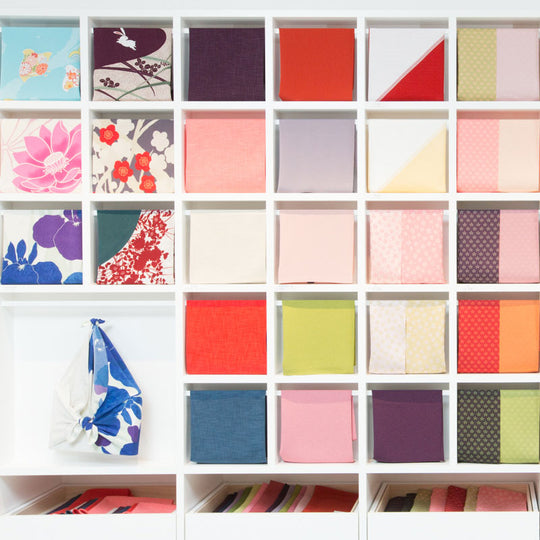
We would love to introduce our 70 Koetsu Chirimen collection. These furoshiki are beautiful when laid flat, with designs inspired by seasonal flowers and plants, as well as works of the Rinpa school of Japanese art. Yet the beauty of their composition truly shines when the cloth is wrapped around something.
A change in the placement of a knot or the shape of a gift can reveal a whole new expression. Here are four compositions to explore.
1. Katami-gawari: A diagonal contrast


Katami-gawari is a design featuring a diagonal contrast between patterns or colors. By placing the item in the center of the cloth, you can showcase both sides of the design when it is wrapped.
This composition looks especially beautiful when wrapping two bottles or using the basic Otsukaizutsumi style.


2. Wakudori: A frame of patterns


Wakudori is a composition in which motifs form a frame around the cloth. By placing the item in the center, you can bring the patterns into view around the knot, creating a beautiful contrast between the patterned top and the simpler lower section. When wrapping an item, these simple areas create a sense of balance and elegance, while drawing attention to the decorative details.


3. Omogara: A focal design with open space


This composition places the main design in the bottom right, leaving plenty of open space. Depending on how you wrap the item, you can highlight the design and create a beautiful balance between the patterned and plain areas.


4. Yohaku — The Beauty of Negative Space
Yohaku, or negative space, is an important concept in Japanese art and design. Rather than filling the entire surface with patterns, it leaves open areas that allow the main design to stand out.

Depending on how you fold and tie the furoshiki, you can highlight different parts of the design and create a beautiful contrast between the patterns and the open space.
Sometimes, less is more. The beauty of negative space gives each wrapping a calm and sophisticated appearance.


Discover Your Own Way to Wrap
The beauty of furoshiki is not only in its patterns, but also in how those patterns come to life through wrapping.
The same furoshiki can look completely different depending on the item, the wrapping style, and the position of the knot.
Why not choose your next furoshiki based on what you want to wrap and how you want the design to appear?
Discover the beauty of traditional Japanese wrapping and make your next gift even more special.